
Application
Application
Application
Surgical Reality viewer
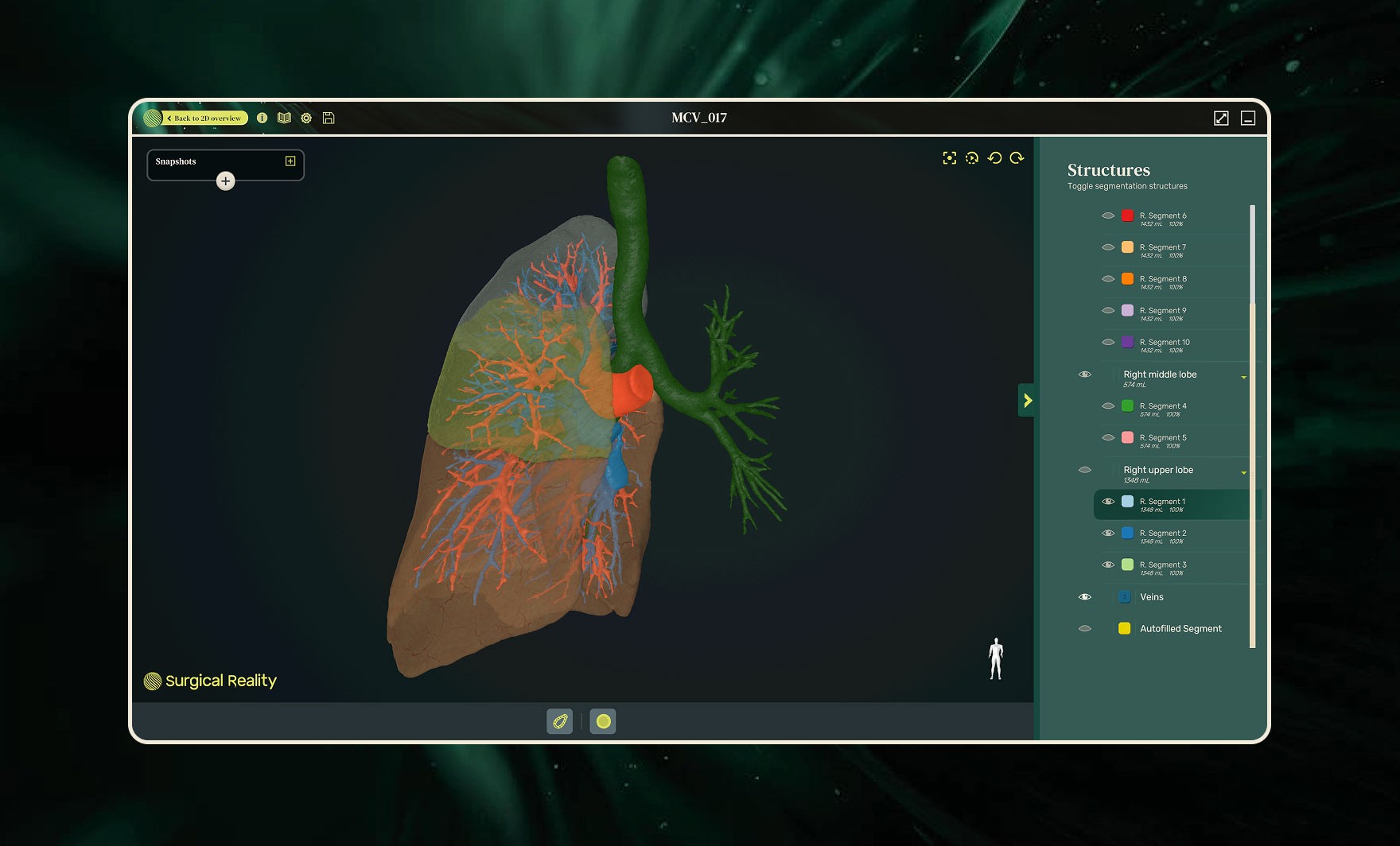
Surgical reality viewer is a CE- and FDA-Certified medical software application that automatically converts standard CT scans into patient-specific 3D models
Surgical reality viewer is a CE- and FDA-Certified medical software application that automatically converts standard CT scans into patient-specific 3D models
Surgical reality viewer is a CE- and FDA-Certified medical software application that automatically converts standard CT scans into patient-specific 3D models
Within minutes, it generates an interactive 3D model to support surgeons in preoperative planning and intraoperative guidance by enabling anatomical visualization, margin assessment, and navigation during VATS and RATS procedures.
" height="24px" id="mal0FetbB" width="18px"/></svg>)
CT-to-3D in minutes
Locally hosted
PACS integration
Workflow
Intuitive, Accessible, and Seamlessly Integrates
Intuitive, Accessible, and Seamlessly Integrates
Designed together with surgeons, the Viewer is intuitive, accessible, and seamlessly integrates into existing preoperative and intraoperative workflows. Every step is designed to reduce complexity, minimize clicks, and support fast, reliable surgical guidance.
Designed together with surgeons, the Viewer is intuitive, accessible, and seamlessly integrates into existing preoperative and intraoperative workflows. Every step is designed to reduce complexity, minimize clicks, and support fast, reliable surgical guidance.
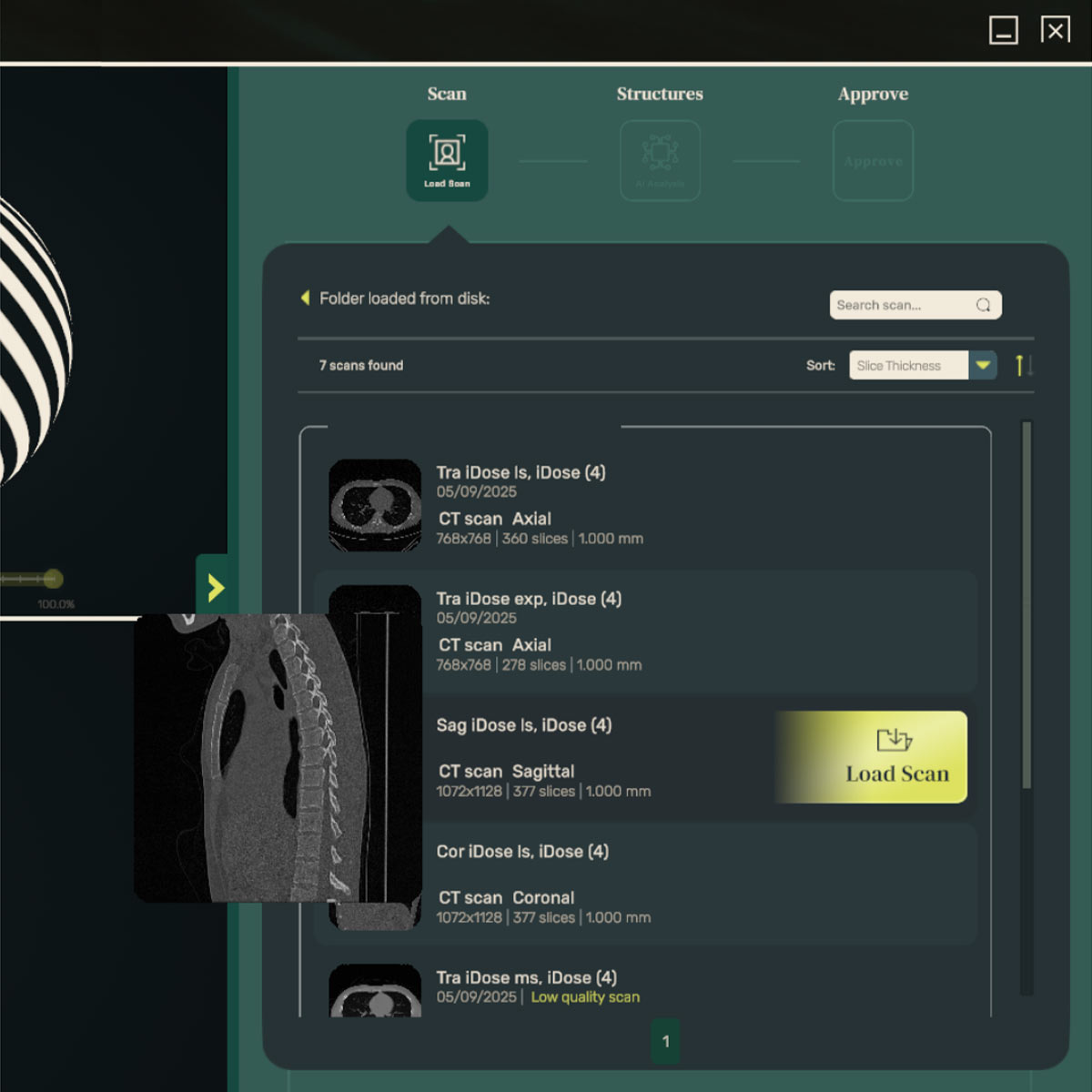
Load CT from PACS
Select DICOM series directly from Disk or PACS using the integrated DICOM selector.
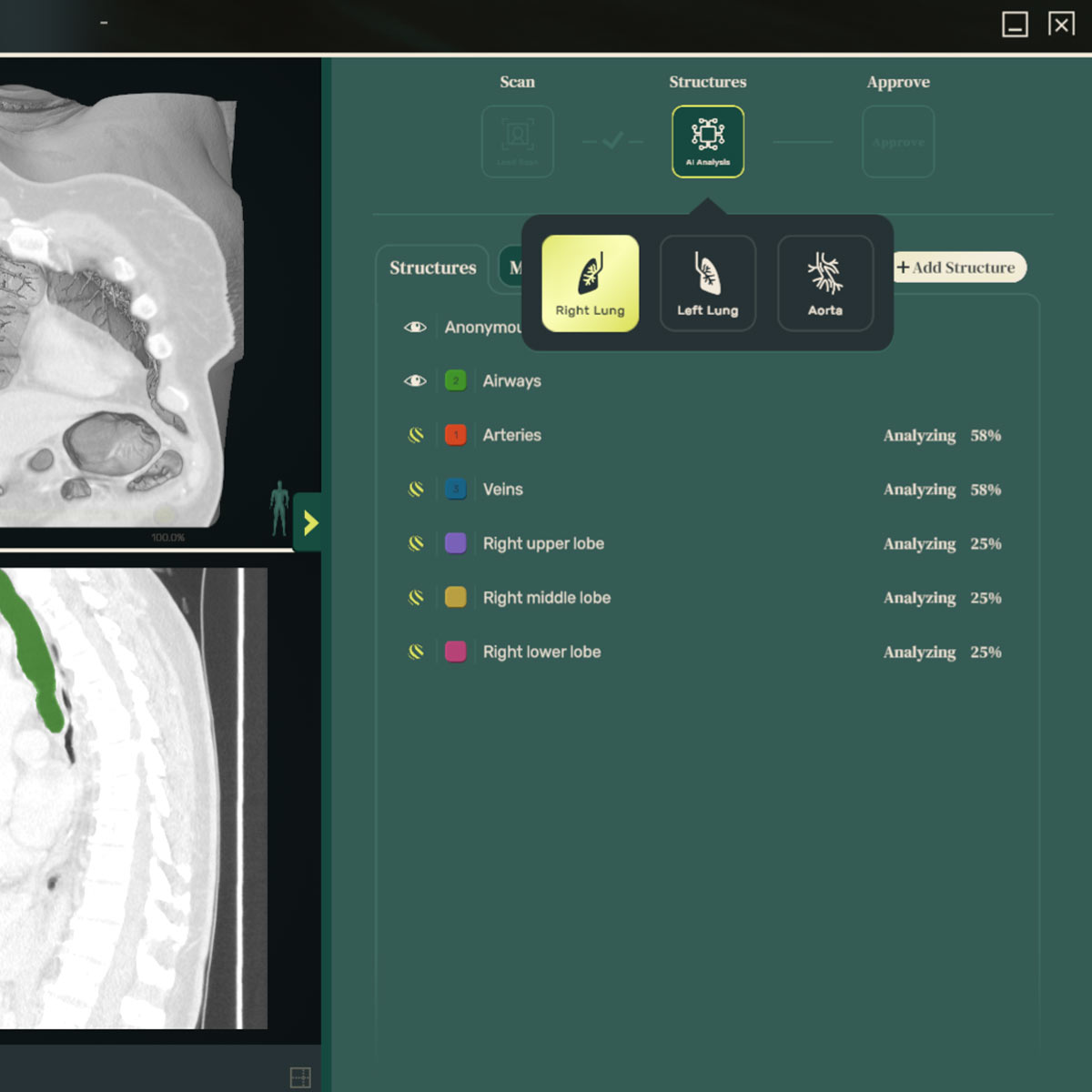
CT to 3D model in minutes
Select which lung to process to start AI-driven anatomical labeling.
Mark Tumor & Plan
Annotate the tumor with one click, define resection margins, add measurements and adjust segmentations with simple tools.
Interactive 3D Model
Simulate tissue movement based on real tissue characteristics to mimic intraoperative behavior
Intraoperative Guidance
View patient-specific 3D anatomy alongside endoscopic video (VATS/RATS) in real time
Features
PACS Integrated and Locally Hosted
PACS Integrated and Locally Hosted
The Surgical Reality Viewer is PACS-integrated and runs fully on-premise within the hospital network, without requiring cloud connectivity. Patient CT scans can be securely retrieved via PACS or directly from imaging modalities within the hospital network.
The Viewer’s series selector previews DICOM series and allows quick selection and loading of the desired DICOM series. All data remains within the hospital network and can be reviewed, edited, and accessed across workstations. Results can also be optionally sent back to PACS.
The Surgical Reality Viewer is PACS-integrated and runs fully on-premise within the hospital network, without requiring cloud connectivity. Patient CT scans can be securely retrieved via PACS or directly from imaging modalities within the hospital network.
The Viewer’s series selector previews DICOM series and allows quick selection and loading of the desired DICOM series. All data remains within the hospital network and can be reviewed, edited, and accessed across workstations. Results can also be optionally sent back to PACS.
High-Fidelity CT Rendering
High-Fidelity CT Rendering
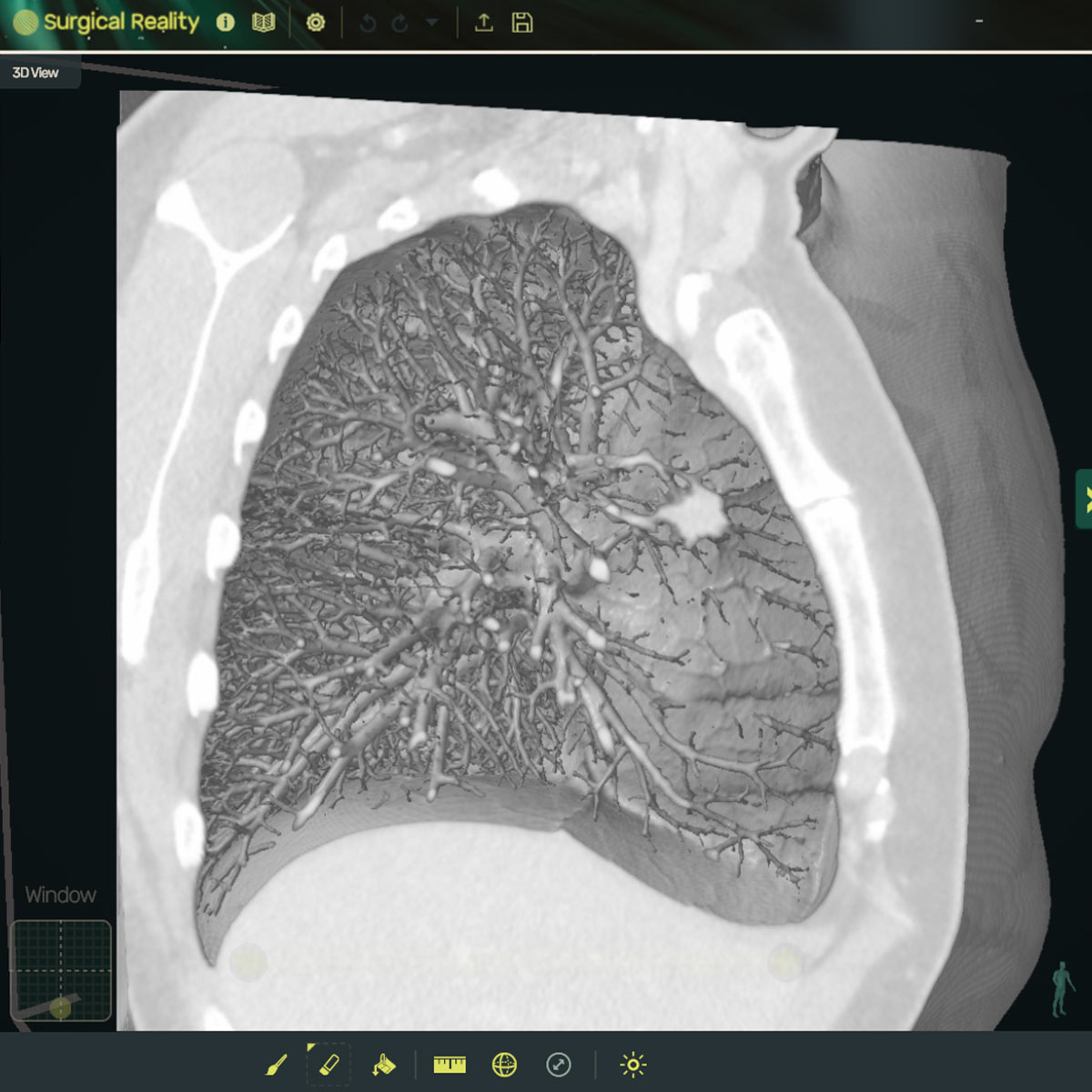
In addition to conventional 2D CT viewing, the Surgical Reality Viewer provides high-quality 3D volume rendering of CT data. This enables detailed visualization of lung anatomy and surrounding tissues in relation to the patient-specific 3D model. The result is improved spatial understanding and comprehensive anatomical assessment for surgical planning.
In addition to conventional 2D CT viewing, the Surgical Reality Viewer provides high-quality 3D volume rendering of CT data. This enables detailed visualization of lung anatomy and surrounding tissues in relation to the patient-specific 3D model. The result is improved spatial understanding and comprehensive anatomical assessment for surgical planning.
Automated Labeling of Anatomical Structures Within Minutes
Automated Labeling of Anatomical Structures Within Minutes
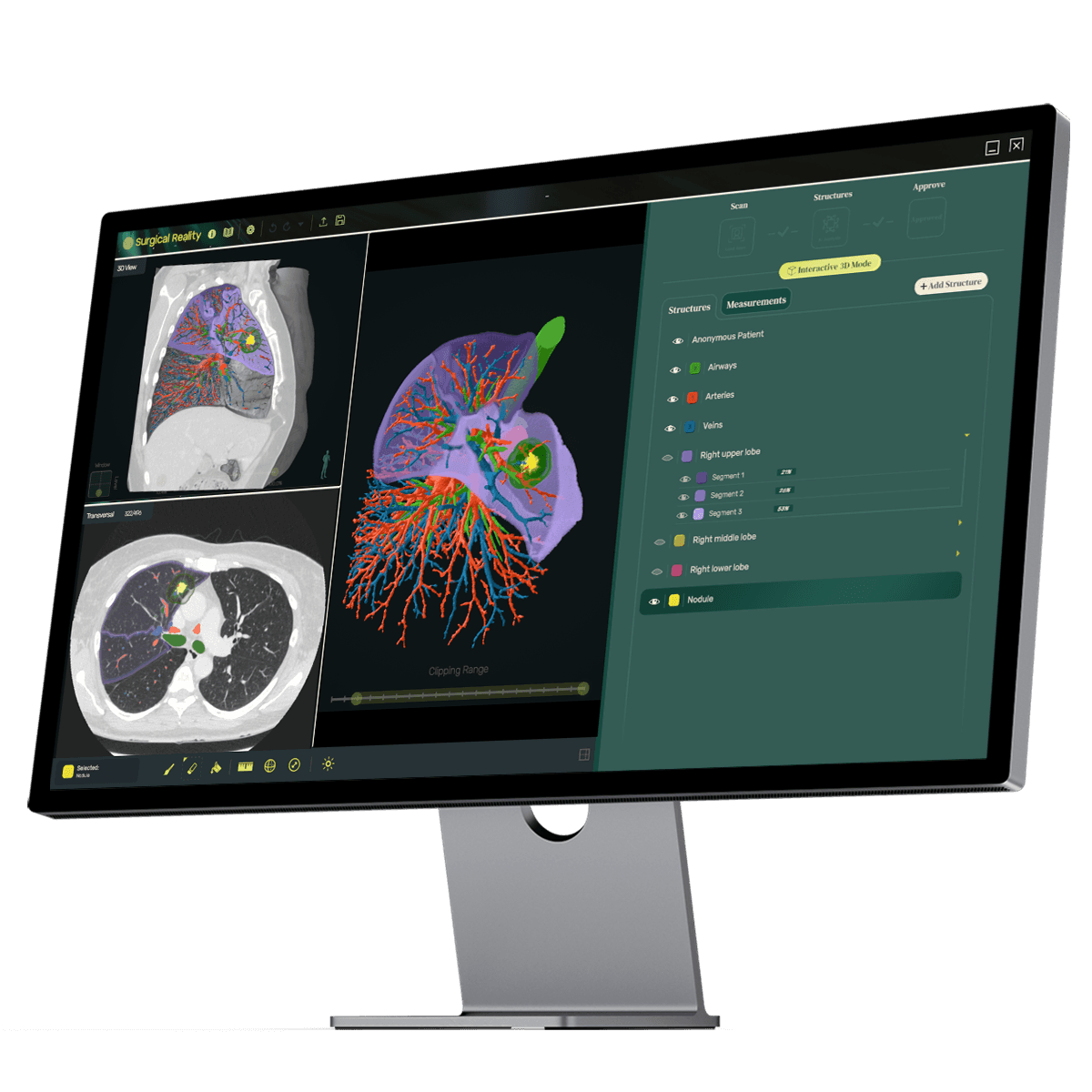
The loaded CT scan can be converted into a patient-specific 3D model with a single click. You select the side of the lung to process, and the AI automatically starts generating a 3D reconstruction. Within minutes, anatomical structures are labeled in color, including bronchi, arteries, veins, lobes, and segments.
The loaded CT scan can be converted into a patient-specific 3D model with a single click. You select the side of the lung to process, and the AI automatically starts generating a 3D reconstruction. Within minutes, anatomical structures are labeled in color, including bronchi, arteries, veins, lobes, and segments.


Lex Maat MD
Cardiothoracic surgeon, Erasmus MC
“This is the greatest break-through in preoperative surgical imaging since the introduction of the CT-scan in the 1970’s”

Sjoerd Nell
Surgical Oncologist, HMC
“A powerful yet intuitive solution that brings greater precision to lung surgery, helping surgeons achieve optimal results in both segmentectomy and lobectomy procedures.”
Lex Maat MD
Cardiothoracic surgeon, Erasmus MC
“This is the greatest break-through in preoperative surgical imaging since the introduction of the CT-scan in the 1970’s”
Sjoerd Nell
Surgical Oncologist, HMC
“A powerful yet intuitive solution that brings greater precision to lung surgery, helping surgeons achieve optimal results in both segmentectomy and lobectomy procedures.”
Lex Maat MD
Cardiothoracic surgeon, Erasmus MC
“This is the greatest break-through in preoperative surgical imaging since the introduction of the CT-scan in the 1970’s”
Sjoerd Nell
Surgical Oncologist, HMC
“A powerful yet intuitive solution that brings greater precision to lung surgery, helping surgeons achieve optimal results in both segmentectomy and lobectomy procedures.”
Lex Maat MD
Cardiothoracic surgeon, Erasmus MC
“This is the greatest break-through in preoperative surgical imaging since the introduction of the CT-scan in the 1970’s”
Sjoerd Nell
Surgical Oncologist, HMC
“A powerful yet intuitive solution that brings greater precision to lung surgery, helping surgeons achieve optimal results in both segmentectomy and lobectomy procedures.”
Anatomy-Based Segmental Borders
Anatomy-Based Segmental Borders
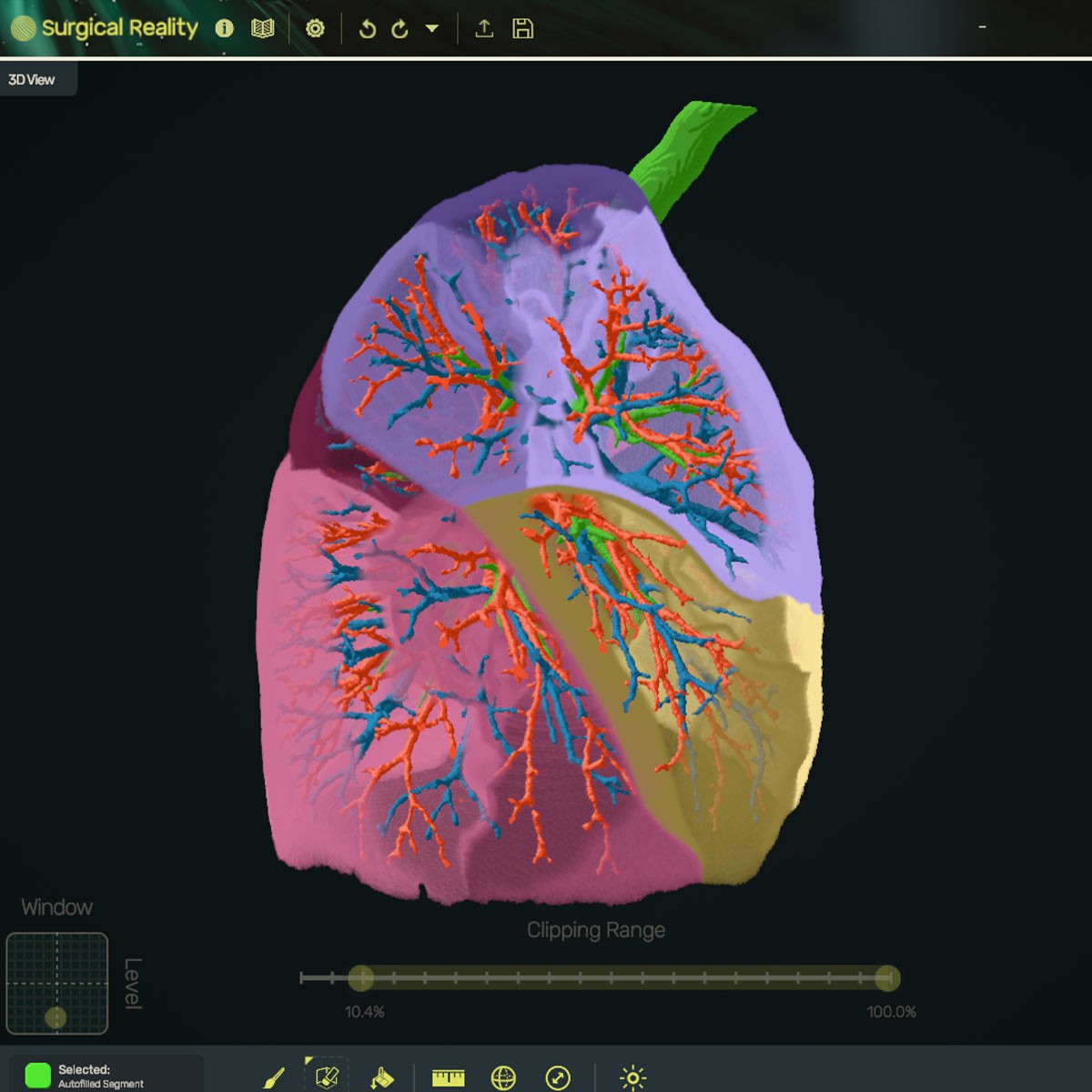
The automatically generated segmentations take both airway and arterial anatomy into account, ensuring anatomically correct segmental borders adapted to patient-specific anatomy. This enables accurate identification of segmental planes in relation to tumor margins, supporting precise segmentectomy planning and ICG-based delineation, according to the most recent technical recommendations. (Brunelli et al., 2023)
The automatically generated segmentations take both airway and arterial anatomy into account, ensuring anatomically correct segmental borders adapted to patient-specific anatomy. This enables accurate identification of segmental planes in relation to tumor margins, supporting precise segmentectomy planning and ICG-based delineation, according to the most recent technical recommendations. (Brunelli et al., 2023)
Easy-to-Use Interface Designed for Surgeons
Easy-to-Use Interface Designed for Surgeons
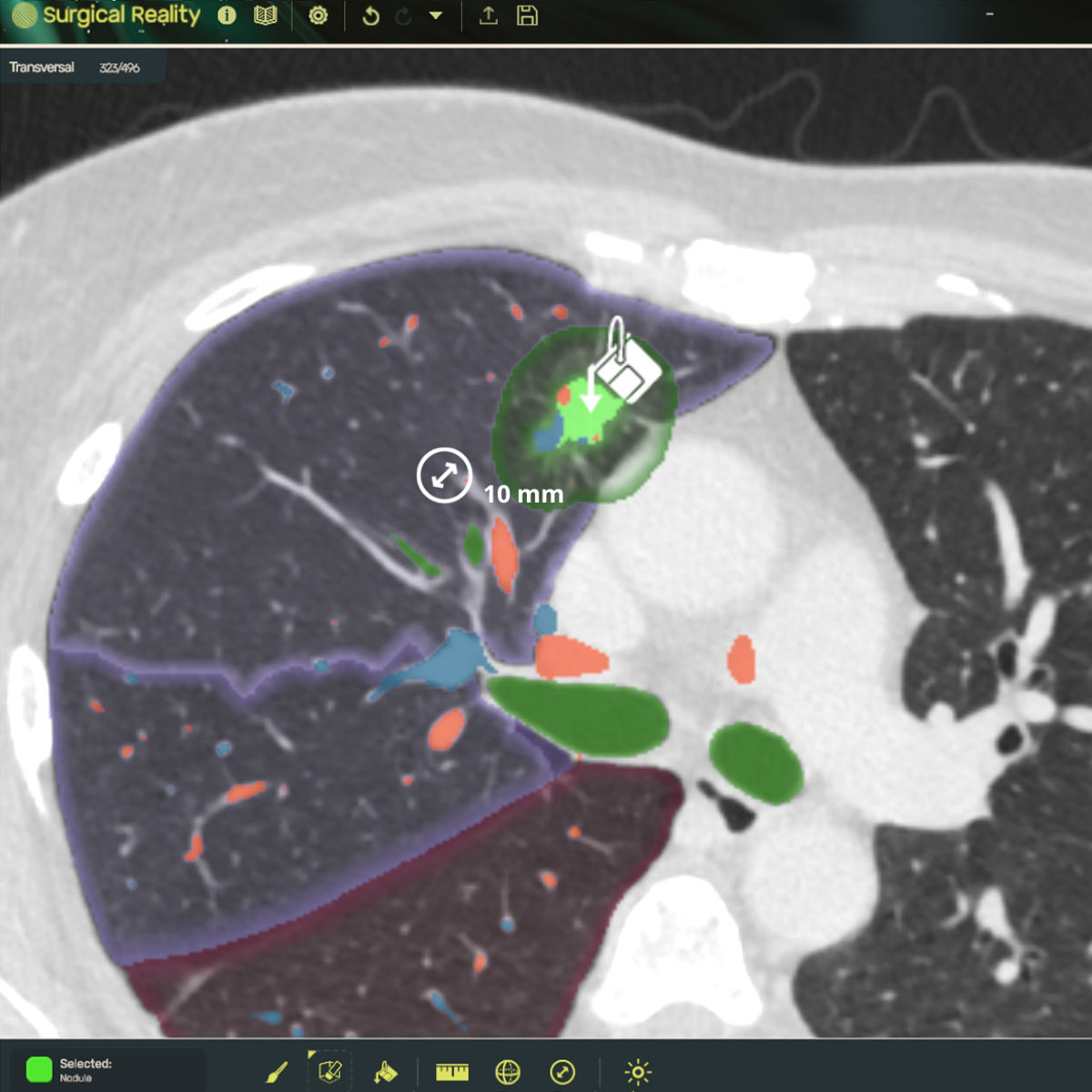
The interface is developed with and for surgeons, aligned with clinical workflows. It resembles standard DICOM viewers used in PACS systems for easy adoption. Using simple automated annotation tools, tumors and pulmonary lesions can be marked with a single click. Integrated planning tools support margin simulation and quantitative measurements on CT data. Anatomical structures can be easily toggled on and off to focus on the region of interest. The design remains intuitive, without unnecessary complexity.
The interface is developed with and for surgeons, aligned with clinical workflows. It resembles standard DICOM viewers used in PACS systems for easy adoption. Using simple automated annotation tools, tumors and pulmonary lesions can be marked with a single click. Integrated planning tools support margin simulation and quantitative measurements on CT data. Anatomical structures can be easily toggled on and off to focus on the region of interest. The design remains intuitive, without unnecessary complexity.
Surgeon Stays in Control
Surgeon Stays in Control
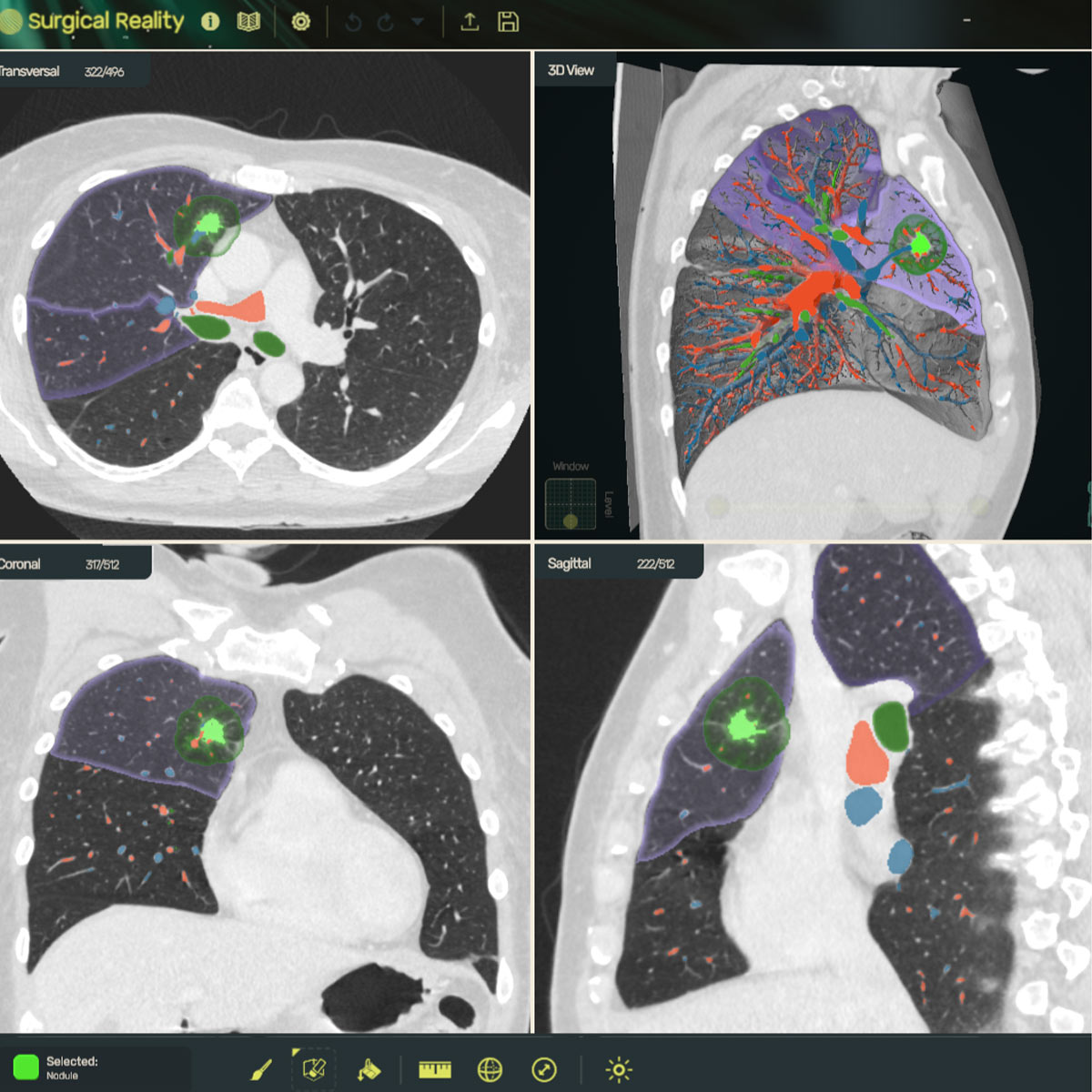
The automatically generated 3D model remains directly linked to the original CT data, ensuring continuous anatomical reference. If needed, the segmentations can be refined using integrated editing tools, including simple drawing and erasing functions. Once clinically validated, the interactive and deformable 3D model is generated.
The automatically generated 3D model remains directly linked to the original CT data, ensuring continuous anatomical reference. If needed, the segmentations can be refined using integrated editing tools, including simple drawing and erasing functions. Once clinically validated, the interactive and deformable 3D model is generated.
Interactive and Deformable 3D Model
Interactive and Deformable 3D Model
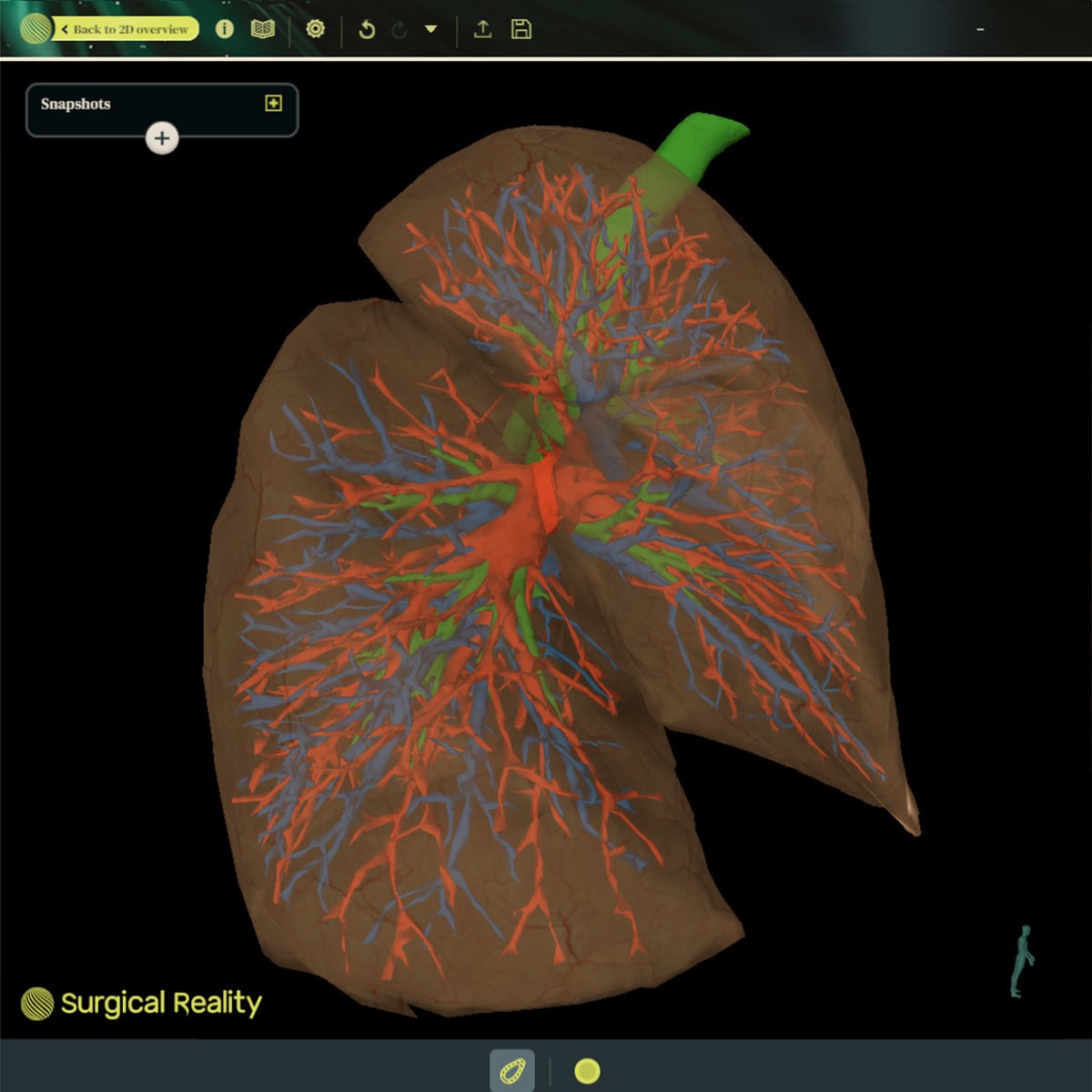
An interactive, patient-specific deformable 3D model can be generated within seconds, mimicking tissue behaviour during surgical manipulation. Advanced simulation techniques replicate how lung tissue responds to pressure and instrument interaction, improving spatial understanding of anatomy in its intraoperative context.
An interactive, patient-specific deformable 3D model can be generated within seconds, mimicking tissue behaviour during surgical manipulation. Advanced simulation techniques replicate how lung tissue responds to pressure and instrument interaction, improving spatial understanding of anatomy in its intraoperative context.
Intraoperative Guidance
Intraoperative Guidance
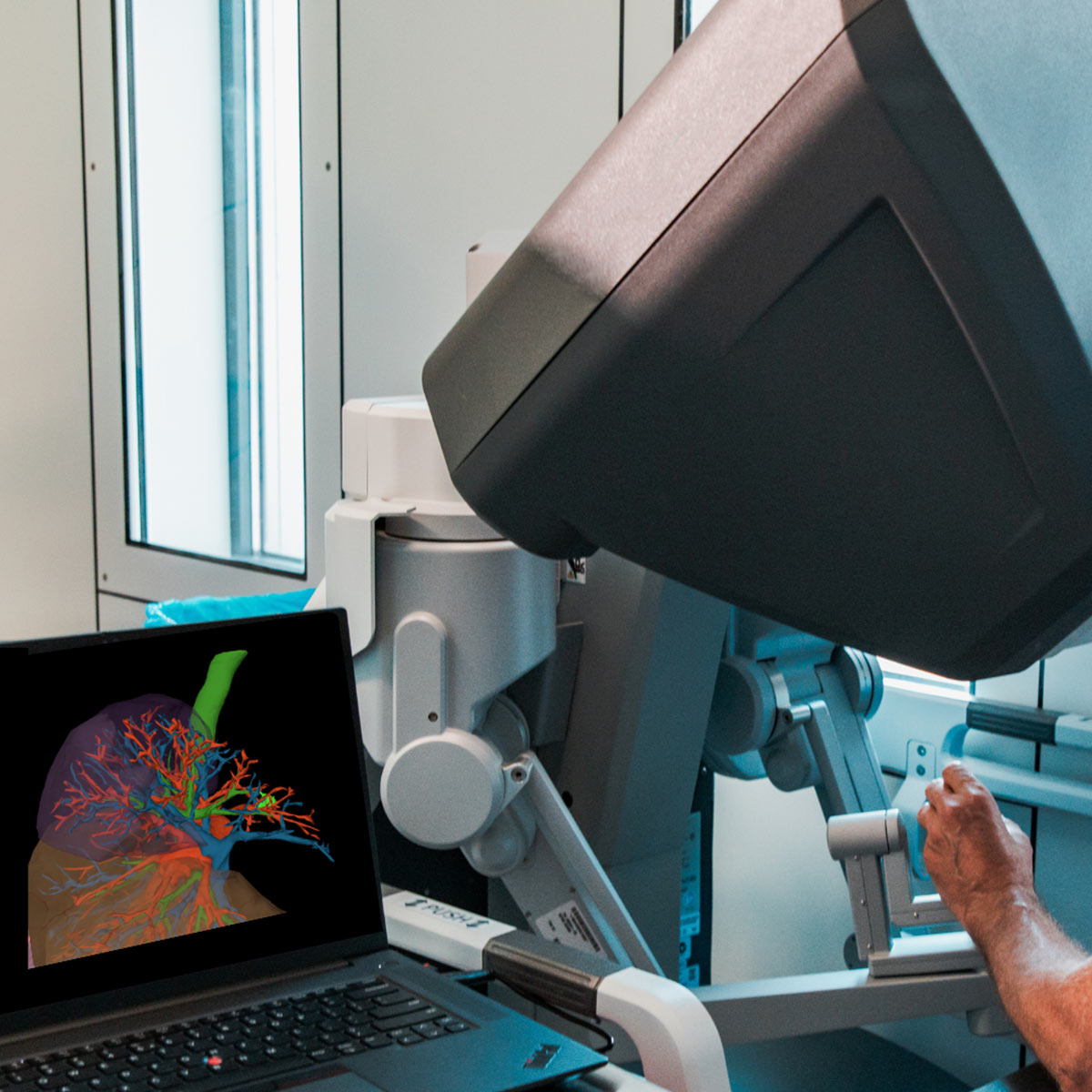
During surgery, the patient-specific 3D model remains continuously available and can be displayed alongside the endoscopic video (VATS/RATS), including seamless integration within robotic console monitors. This enables real-time navigation of anatomical structures and confirmation of landmarks.
After surgery, all cases remain available for review, educational use, and a clinical report can be added to the patient's electronic health record profile.
During surgery, the patient-specific 3D model remains continuously available and can be displayed alongside the endoscopic video (VATS/RATS), including seamless integration within robotic console monitors. This enables real-time navigation of anatomical structures and confirmation of landmarks.
After surgery, all cases remain available for review, educational use, and a clinical report can be added to the patient's electronic health record profile.
Workflow benefits
Optimized for Speed and Seamless Integration in Your Daily Workflow
Optimized for Speed and Seamless Integration in Your Daily Workflow
Connect to PACS using least-privileged access controls
Connect to RATS consoles for side-by-side 3D visualization
Connect to VATS towers for intraoperative 3D display
Plan behind your desk and take cases directly with you to the OR
Load CT scans in seconds, generate segmentations in minutes, and render complex lung tissue deformation in real time.
Evidence
Insights Driven
Innovation
Insights Driven
Innovation
Insights Driven
Innovation
-30 min
-30 min
Operating time for 3D VATS compared to 2D VATS
Operating time for 3D VATS compared to 2D VATS
Evidence articles
Request a Demo
Experience patient-specific 3D planning for thoracic surgery.
CT-to-3D in minutes
Locally hosted
PACS integration
Request a Demo
Experience patient-specific 3D planning for thoracic surgery.
CT-to-3D in minutes
Locally hosted
PACS integration
Request a Demo
Experience patient-specific 3D planning for thoracic surgery.
CT-to-3D in minutes
Locally hosted
PACS integration
Follow us on Linkedin
Stay informed about the latest developments

Follow us on Linkedin
Stay informed about the latest developments
Follow us on Linkedin
Stay informed about the latest developments